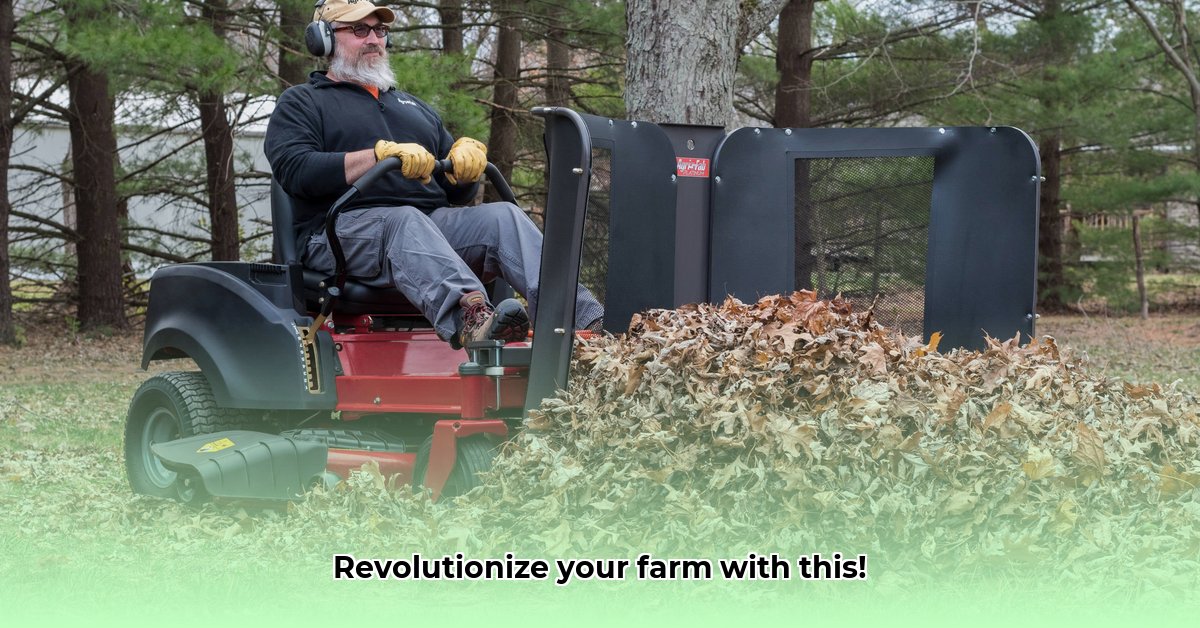
Leaf cleanup is a significant challenge in sustainable agriculture, consuming valuable time and resources. However, tractor leaf rakes offer a powerful solution, significantly boosting efficiency and reducing labor costs. This guide provides a step-by-step approach to selecting, implementing, and maintaining a tractor leaf rake, maximizing its benefits for your farm's sustainability and profitability. Are you ready to streamline your leaf removal process and improve your farm's bottom line? For more information on tractor implements, check out this helpful resource.
Assessing Your Needs: Choosing the Right Rake for Your Farm
Before investing in a tractor leaf rake, carefully assess your farm's specific needs. This crucial initial step prevents costly mistakes and ensures you select a rake optimized for your operation. Consider these key factors:
Farm Size: Larger farms benefit from wider rakes, covering more ground per pass, thus increasing efficiency. Smaller operations may find narrower rakes more maneuverable.
Crop Type: Delicate crops require gentler handling, necessitating a rake with carefully spaced tines to minimize damage. More robust crops may allow for a heavier-duty model.
Budget: Leaf rakes vary significantly in price. Establishing a clear budget early in the selection process prevents financial surprises.
Terrain: Uneven terrain necessitates a sturdier, more maneuverable rake compared to flat land. A robust rake ensures safe and efficient operation, preventing potential damage to both the equipment and the surrounding environment. Don't you want a durable option?
Choosing Your Tractor Leaf Rake: Key Features and Comparisons
Understanding your farm's requirements leads to informed rake selection. The following features are crucial:
Tine Strength and Material: Durable tines, often made from hardened steel, are vital for longevity. Look for replaceable tines to minimize downtime and repair costs. Would you prefer a rake with replaceable tines for long-term cost savings?
Tractor Compatibility: Verify compatibility with your tractor's three-point hitch system. Mismatched equipment is dangerous and costly.
Working Width: Wider rakes are faster for large areas, but may be less maneuverable in confined spaces. Select a width appropriate for your typical operating conditions.
Sustainability: Prioritize rakes made from recyclable or sustainably sourced materials, aligning with your commitment to eco-friendly practices. Isn't it important to minimize the environmental footprint of your farming operation?
Comparative Table of Leaf Rake Features:
| Feature | Heavy-Duty Rake | Light-Duty Rake |
|---|---|---|
| Tine Material | Hardened Steel, Replaceable | Steel, potentially less durable |
| Tine Spacing | Adjustable, wider spacing for larger debris | Fixed, closer spacing for finer debris |
| Rake Width | Wider (e.g., 8-12 ft) | Narrower (e.g., 5-7 ft) |
| Hitch Compatibility | Three-point hitch, check tractor specifications | Three-point hitch, check tractor specifications |
| Weight | Heavier, more stable on uneven terrain | Lighter, more maneuverable on flat terrain |
| Price | Higher initial cost | Lower initial cost |
Implementation and Operation: Safety and Efficiency
Safe and efficient operation is paramount. Follow these steps:
Pre-Operation Inspection: Thoroughly inspect the rake before each use for damage, loose bolts, or worn tines.
Secure Attachment: Carefully attach the rake to the tractor's three-point hitch, following the manufacturer's instructions precisely.
Safety Precautions: Always wear appropriate safety gear (eye protection, hearing protection, sturdy footwear) and maintain awareness of your surroundings.
Efficient Raking Technique: Overlap passes slightly for thorough leaf collection. Adjust speed to optimize performance and prevent damage.
Regular Maintenance: Regularly inspect, lubricate, and replace worn components to maintain peak efficiency and longevity.
Long-Term Considerations: Sustainability and Return on Investment
A tractor leaf rake offers considerable long-term benefits:
Return on Investment (ROI): While there's an upfront cost, the long-term savings in labor, fuel, and maintenance contribute to a strong ROI.
Environmental Impact: Choosing eco-friendly materials minimizes the environmental footprint and supports sustainable farming practices.
Future Technology Integration: Consider the potential integration of your leaf rake with future automation and precision farming technologies. How will future technological advancements impact your farming practices?
"Investing in a quality leaf rake is not simply about efficiency; it's about building a sustainable and profitable future," says Dr. Emily Carter, Agricultural Engineering Professor at Cornell University. "By considering the long-term implications of your choice, you are securing the future of your farm and contributing to a more sustainable agricultural landscape."
Conclusion: Taking the Next Steps
Choosing the right tractor leaf rake can revolutionize your farm's leaf removal process. By carefully assessing your needs, selecting a suitable model, and adopting safe and efficient operating practices, you can improve efficiency, reduce costs, and enhance the sustainability of your agricultural operations. Begin your research today and take the first step toward a more productive and environmentally conscious farm.